
 English
  Français
  Español
 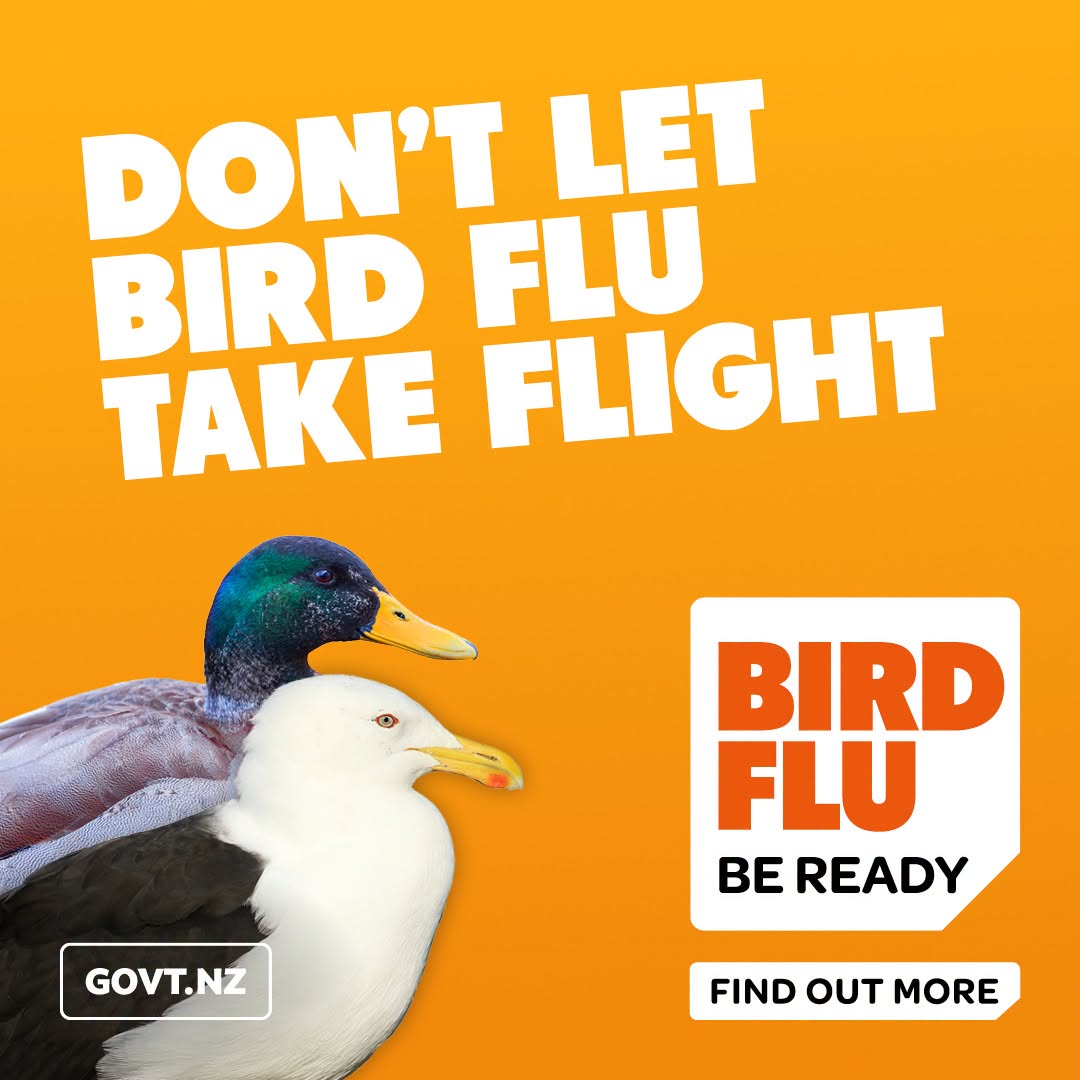 The first positive case of Highly Pathogenic Avian Influenza in New Zealand has put the country on full alert
A Subantarctic or Brown Skua Catharacta antarctica found on Petone Beach, Wellington, has returned a positive test for Highly Pathogenic Avian Influenza (H5N1 bird flu) – the first record for New Zealand. The skua was found alive on the beach by a member of the public on 10 July and taken to the Wellington Zoo where it was tested (click here for the news and a press briefing video).
The New Zealand Biosecurity Minister Andrew Hoggard has stated “This is a coastal detection in an individual ocean-going seabird and there is no evidence of any mass mortality in wildlife or transmission between wild birds in New Zealand. There has been no detection in poultry. The situation is being closely monitored, but at this stage there is no evidence of any illness beyond this seabird. We’ve had people out on Petone beach checking and found no other issues. We will continue to monitor the beach and surrounding areas. We ask the community to be alert and follow advice about reporting sick or dead birds. It is vital that people do not touch or handle unwell birds. The Ministry for Primary Industries (MPI) will continue its wider surveillance and work closely with industry, veterinarians, and wildlife carers.”
Arrival of bird flu in New Zealand follows shortly after its detection on the Australian mainland in a skua and in giant petrels Macronectes spp. It now seems inevitable the disease will affect ACAP-listed seabirds in New Zealand, including the albatrosses and petrels that breed on its many islands.
ACAP Latest News will continue to report on the spread of Highly Pathogenic Avian Influenza in the Southern Hemisphere, especially in relation to its effects on ACAP-listed species.
John Cooper, Emeritus Information Officer, Agreement on the Conservation of Albatrosses and Petrels, 15 July 2026