
 English
  Français
  Español
 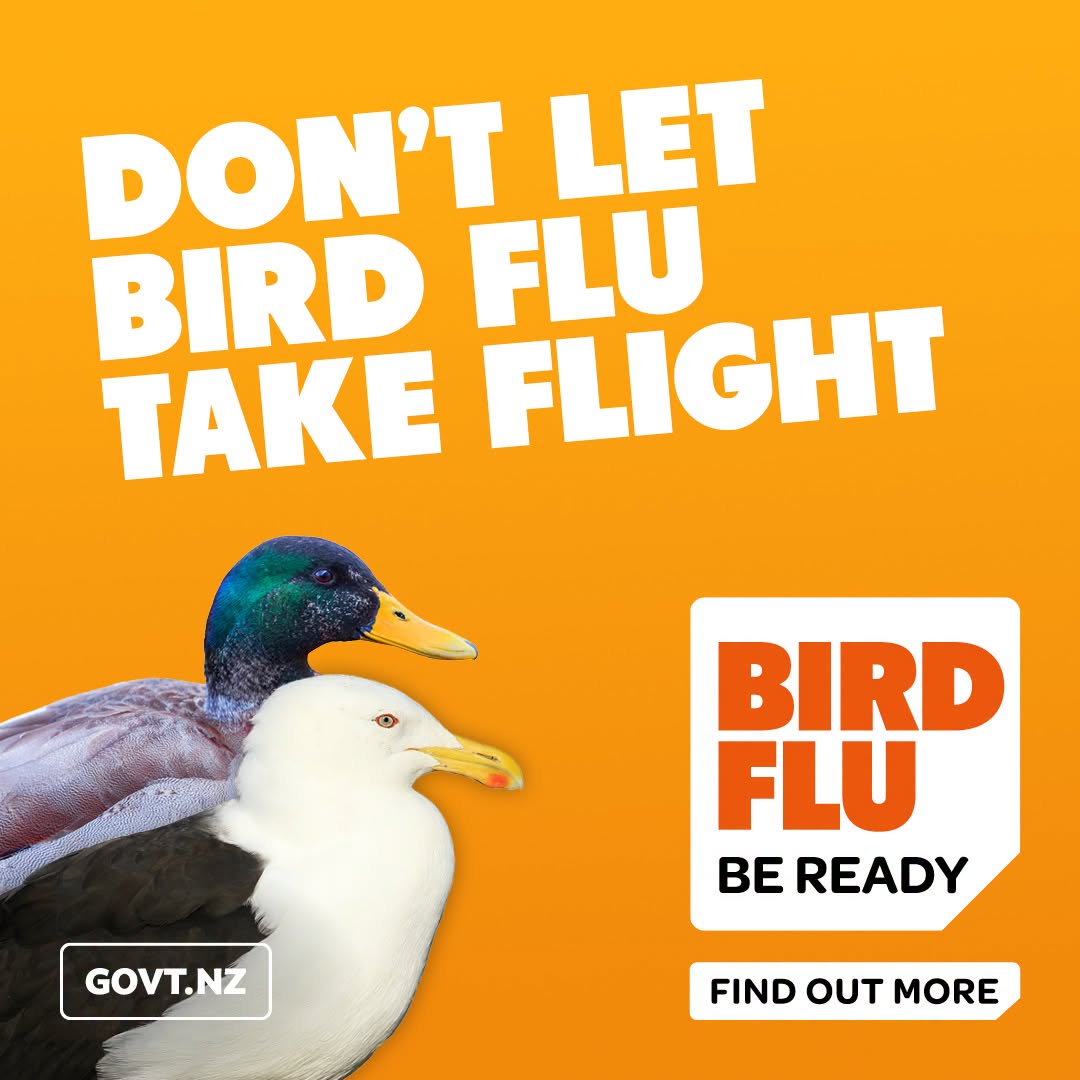 New Zealand has two confirmed detections of H5 High Pathogenicity Avian Influenza (H5 bird flu), with no further detections of H5 bird flu since 17 July 2026. There is no evidence of any mass mortality in wildlife and has been no detection in poultry, according to a situation update from the Ministry of Primary Industries.
The first case was of a Subantarctic or Brown Skua Catharacta antarctica found on 10 July, the second a Swamp Harrier Circus approximans confirmed on 17 July. No cases from ACAP-listed albatrosses and petrels, any other procellariiform species, or from New Zealand’s offshore and sub-Antarctic islands have yet been reported.
"This animated video explains how bird flu is spreading, symptoms to look out for, and biosecurity measures that people can take to be ready"
Read about New Zealand’s response by vaccinating six of its threatened species here.
ACAP Latest News will continue to report on Highly Pathogenic Avian Influenza in the Southern Hemisphere, especially in relation to its effects on ACAP-listed species.
John Cooper, Emeritus Information Officer, Agreement on the Conservation of Albatrosses and Petrels, 22 July 2026