
 English
  Français
  Español
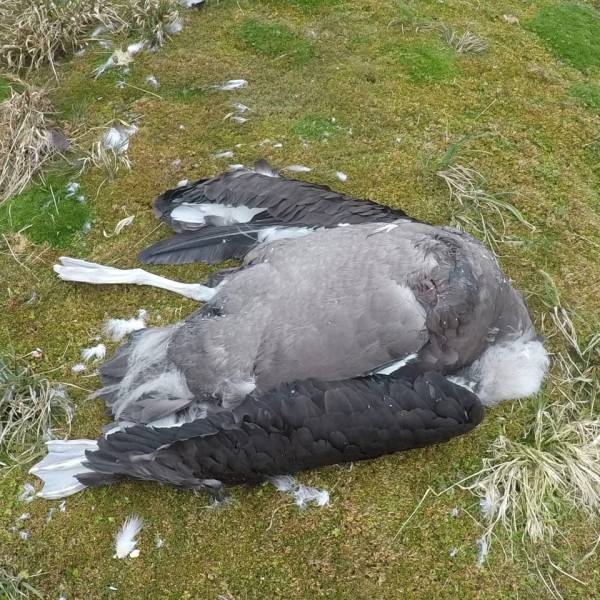
Île de la Possession (Possession Island) with an area of about 150 km² is the largest of the five main islands in the French Îles Crozet in the southern Indian Ocean, and the only one inhabited by a transient human population. The island is mountainous with deep valleys.
Along with the other French island possessions in the Southern Ocean, the Crozets are administered by TAAF (Terres australes et antarctiques françaises). The Alfred Faure research station lies on the eastern side of the island, from which biological research on seabirds, including on the ACAP-listed Wandering Albatross or l'Albatros hurleur Diomedea exulans, is undertaken by CNRS Chizé biologists. Activities ashore are controlled by a management plan with certain areas on the island declared to be Sites réservés à la recherche scientifique et technique with access for research purposes by permit only. Unlike all the other Crozet Islands, Possession falls outside the Réserve naturelle des Terres australes Françaises.
The Crozets form part of a large Ramsar Wetland of International Importance, the second in the Sub-Antarctic after South Africa’s Prince Edward Islands (click here). Additionally the island has been designated as an Important Bird Area (IBA) by BirdLife International (click here).
Twenty-six seabird species are known to breed on the island, including eight ACAP-listed albatrosses and petrels as listed below with their most recent annual breeding numbers as given in the ACAP Data Portal.
Wandering (355 pairs in 2013), Grey-headed Thalassarche chrysostoma (10 pairs in 1981/2), Sooty Phoebetria fusca (84 pairs in 2012/13) and Light-mantled Sooty P. palpebrata (1095 pairs in 2012/13) Albatrosses, Northern Macronectes halli (485 pairs in 2012/13) and Southern M. giganteus (237 pairs in 2012/13) Giant Petrels and White-chinned Procellaria aequinoctialis (5783 pairs in 2003/04) and Grey P. cinerea Petrels.
Black Rats Rattus rattus are present on Île de la Possession and are thought to have affected burrowing petrels. Click here to read of French efforts to rid their southern islands of introduced mammals.
Situated a day’s hike from the research station, the Champs des albatros area supports approximately 140 annually breeding pairs of Wandering Albatrosses
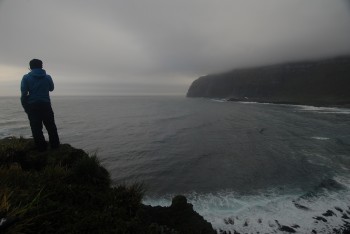
Morning in the Jardin Japonais (Japanese Garden). Giant petrels and Sooty and Grey-headed Albatrosses occur here

A colony of Sooty Albatrosses breeds on the cliffs. Wandering and Light-mantled Sooty Albatrosses and both species of giant petrels breed in the vicinity
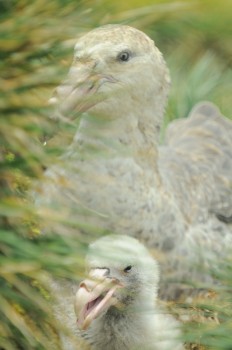
Southern Giant Petrels breed over much of the island with the largest numbers in the Jardin Japonais and Champs des albatros areas
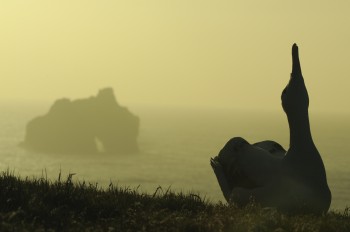
A Wandering Albatross at sunset with Roche Percée in the background
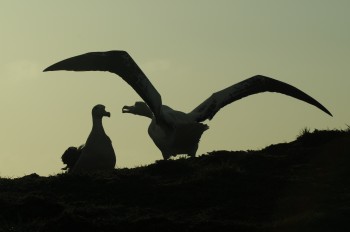
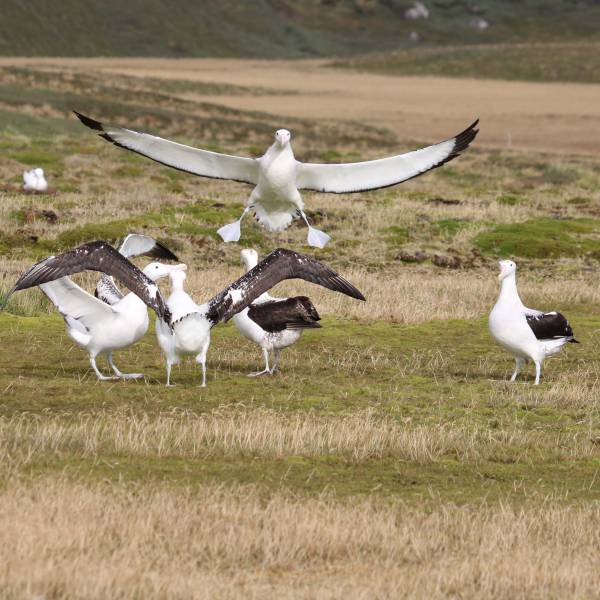
Displaying Wandering Albatrosses
Read ACAP Breeding Site accounts for the other French sub-Antarctic islands: Kerguelen, Amsterdam and Saint-Paul.
All photographs by Theron Franck.
Selected References:
Catard, A. 2001. French Southern Territories. In: Fishpool, L.D.C. & Evans. M.I. (Eds). Important Bird Areas in Africa and Associated Islands: Priority Sites for Conservation. Newbury: Pisces Publications & Cambridge: BirdLife International. pp. 337-347.
Duriez, O. & Delord, K. 2012. Manchots, petrels et albatross: oiseaux des Terres australes et antarctiques françaises (TAAF). Ornithos 19-3: 162-183.
Duriez, O., Jornvaal, H. & Shirihai, H. 2005. Birds and wildlife of the French sub-Antarctic islands: Crozet, Kerguelen and Amsterdam & St Paul. Dutch Birding 27: 87-115.
Headland, R.K. 2012. History of exotic terrestrial mammals in Antarctic regions. Polar Record 48: 123-144.
Ministère de l'Écologie et du Développement Durable 2008. Décret No. 2006-1211 du 3 octobre 2006 portant creation de la reserve naturelle des Terres australes françaises. Journal Officiel de la République Française. 4 octobre 2006. 4 pp.
Pisanu, B., Caut, S., Gutjahr S., Vernon, P. & Chapuis, J.-L. 2011. Introduced black rats (Rattus rattus) on Ile de la Possession (Iles Crozet, Subantarctic): diet and trophic position in food webs. Polar Biology 34: 169-180.
Shirihai, H. 2007. A Complete Guide to Antarctic Wildlife. The Birds and Marine Mammals of the Antarctic Continent and the Southern Ocean. Second Edition. London: A & C Black. pp. 466-470.
TAAF 2006. Instructions sur la protection de l'environnement dans les Terres australes antarctiques françaises. Saint-Pierre: Terres australes et antarctiques françaises. 9 pp.
TAAF 2010. Plan de gestion 2011 - 2015 Réserve naturelle des Terres australes françaises. Saint Pierre, La Réunion: Terres australes et antarctiques françaises. 35 pp.
John Cooper, ACAP Information Officer & Theron Franck, Centre d’Etudes Biologiques de Chizé, France, 06 December 2013