
 English
  Français
  Español
 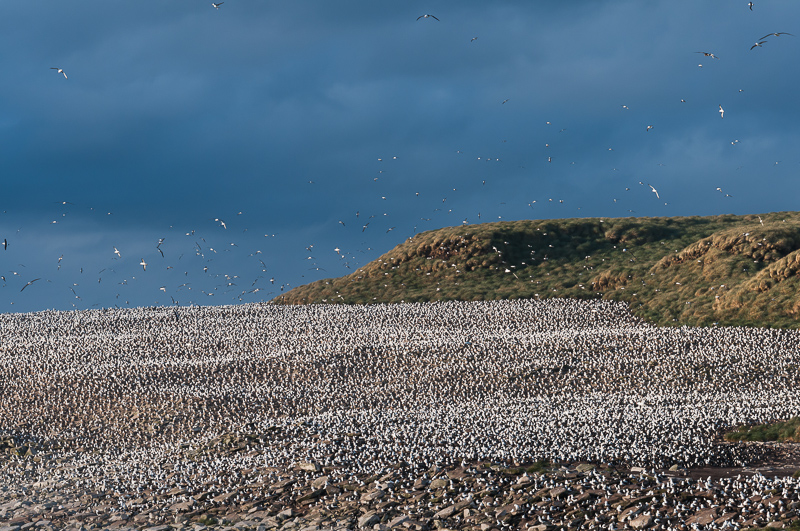 Beauchêne Island hosts the world’s second largest colony of Black-browed Albatrosses, photograph by Anton Wolfaardt
Evidence of repeated unusual mortality events affecting Black-browed Albatrosses Thalassarche melanophris have been reported from Beauchêne Island, part of the Falkland Islands (Islas Malvinas)* in the South Atlantic, including more than 40 carcasses observed this 2025/2026 summer and hundreds of skeletons from previous years. Collected samples have now been confirmed to include the causative agent of Highly Pathogenic Avian Influenza H5N1 (bird flu). Mortality on Beauchêne appears to only be affecting albatrosses – no unusual numbers of carcasses were observed among other species that occur on the island, including penguins, cormorants, caracaras and sealions present on the island – and to be concentrated to a few specific parts of the colony.
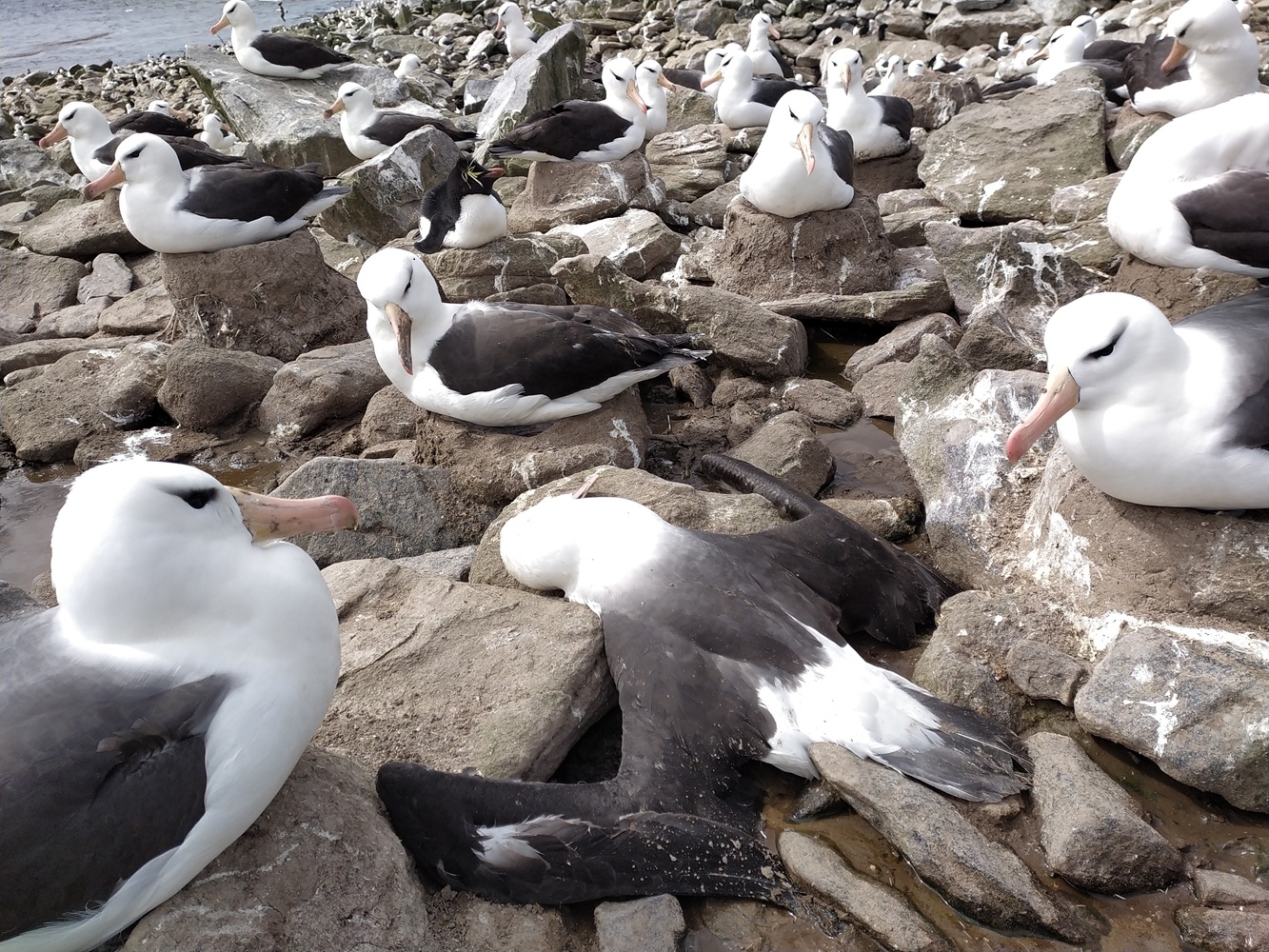
Tens of fresh carcasses, like the one depicted here,and hundreds of skeletons of Black-browed Albatrosses were found on Beauchêne Island, photograph by Amandine Gamble
A scientific team from Cornell University (USA), Montpellier Université (France), University of Tasmania (Australia) and the Joint Nature Conservation Committee (UK) on board SY Le Sourire collected additional samples for further analysis at Cornell University aimed at characterizing the plausible source(s) of introduction of the virus. Additional samples were collected from live animals to assess the true extent of the outbreak(s) and consequent immunity levels in the population.
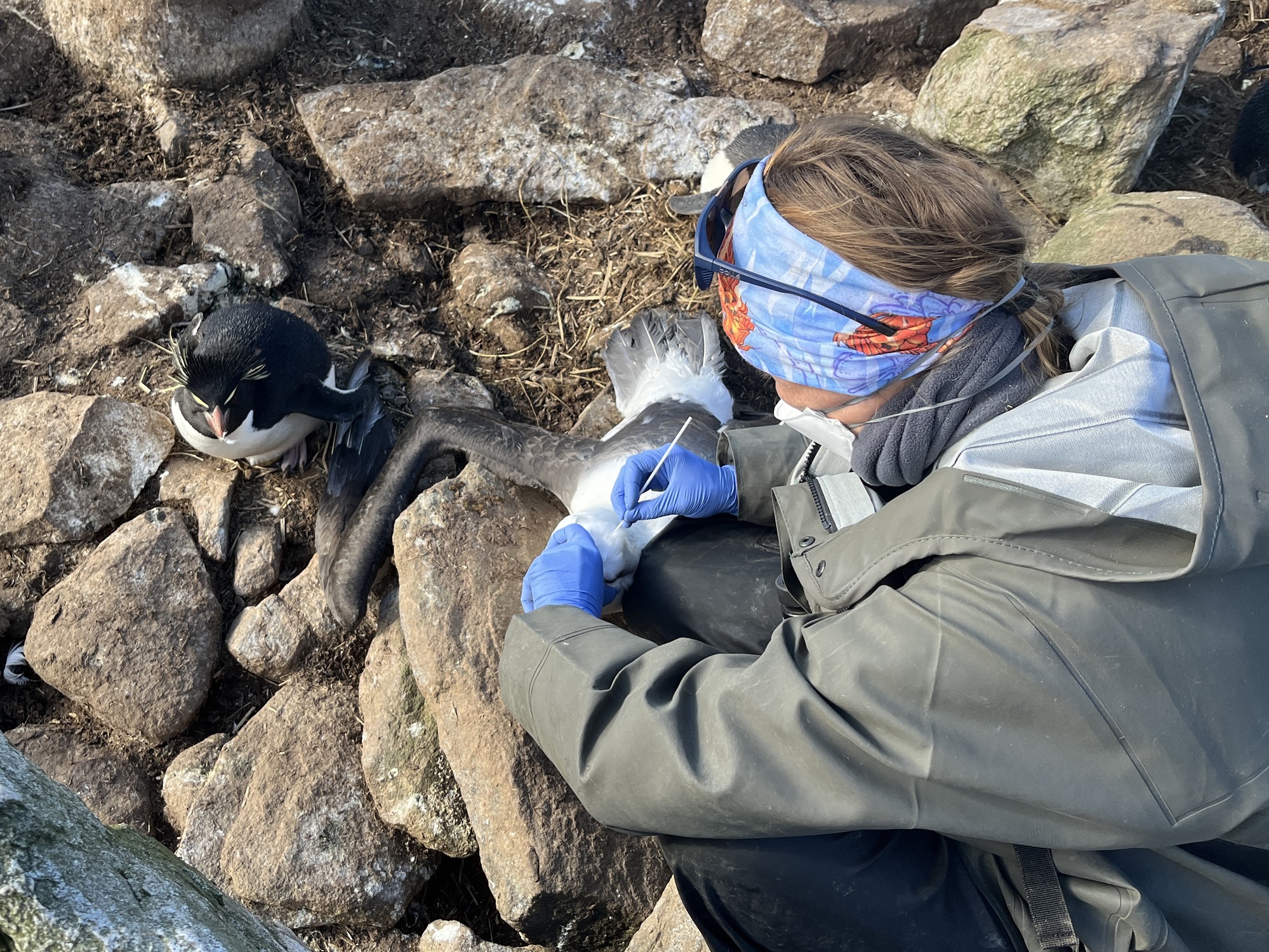
Amandine Gamble collects samples from a dead Black-browed Albatross on Beauchêne Island, photograph by Megan Tierney
Beauchêne hosts the World’s second largest colony of Black-browed Albatrosses, with an estimate of 109 000 pairs. The largest colony, on Steeple Jason Island, Falkland Islands (Islas Malvinas)*, was affected by bird flu in 2023/2024, and had a significant reduction of breeding pairs the following year. The recurrence of mortality events affecting breeding birds in these key populations raises concern for the species and highlights the urgent need for continued monitoring that is as exhaustive as possible in terms of surveyed species and locations.
With thanks to Patricia Serafini.
Amandine Gamble, Member, ACAP High Pathogenicity H5N1 Avian Influenza Intersessional Group, Department of Public and Ecosystem Health, Cornell University, Ithaca, New York, USA, 08 December 2025