 English
  Français
  Español
 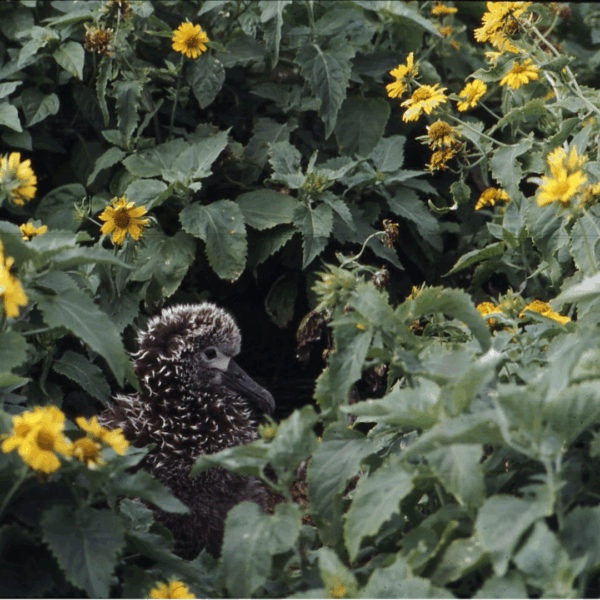 A Laysan Albatross chick among dense Verbesina on Midway Atoll, photograph by US Fish & Wildlife Service, 2023
In May 2000 I spent a week with other attendees on the USA’s Midway Atoll after the Second Albatross and Petrel Conference, held in Honolulu on the Hawaiian island of Oahu. An abiding memory is of the huge numbers of Laysan Albatrosses Phoebastria immutabilis, seemingly everywhere over the atoll, including a courting pair (presumably pre-breeders) right below my ground-floor bedroom window (left open for the heat), that shouted at each other all night long. Another memory was of the late-season thickets of the invasive Golden Crownbeard Verbesina encelioides, among which the Black-footed P. nigripes and Laysan Albatrosses bred on both the atoll’s Eastern and Sand Islands. Native to the American mainland it is an alien on the Northwestern Hawaiian islands where it occurs, including Midway (where thought introduced in the 1930s) and Kure Atolls (click here). Adult albatrosses can get their wings caught in its branches and the dense vegetation blocks cooling sea breezes, creating oven-like conditions for their chicks, putting them at risk of death from dehydration. Eradication efforts began in the late 1990s (click here), but in 2000 when I visited there were still extensive stands of the plant on Sand Island.
Since my visit, use of hand-sprayed herbicides in the mid-2010s and the removal of plants has greatly changed the appearance of the albatross breeding flats, as these two photographs taken on Midway’s Eastern Island 12 years apart testify.
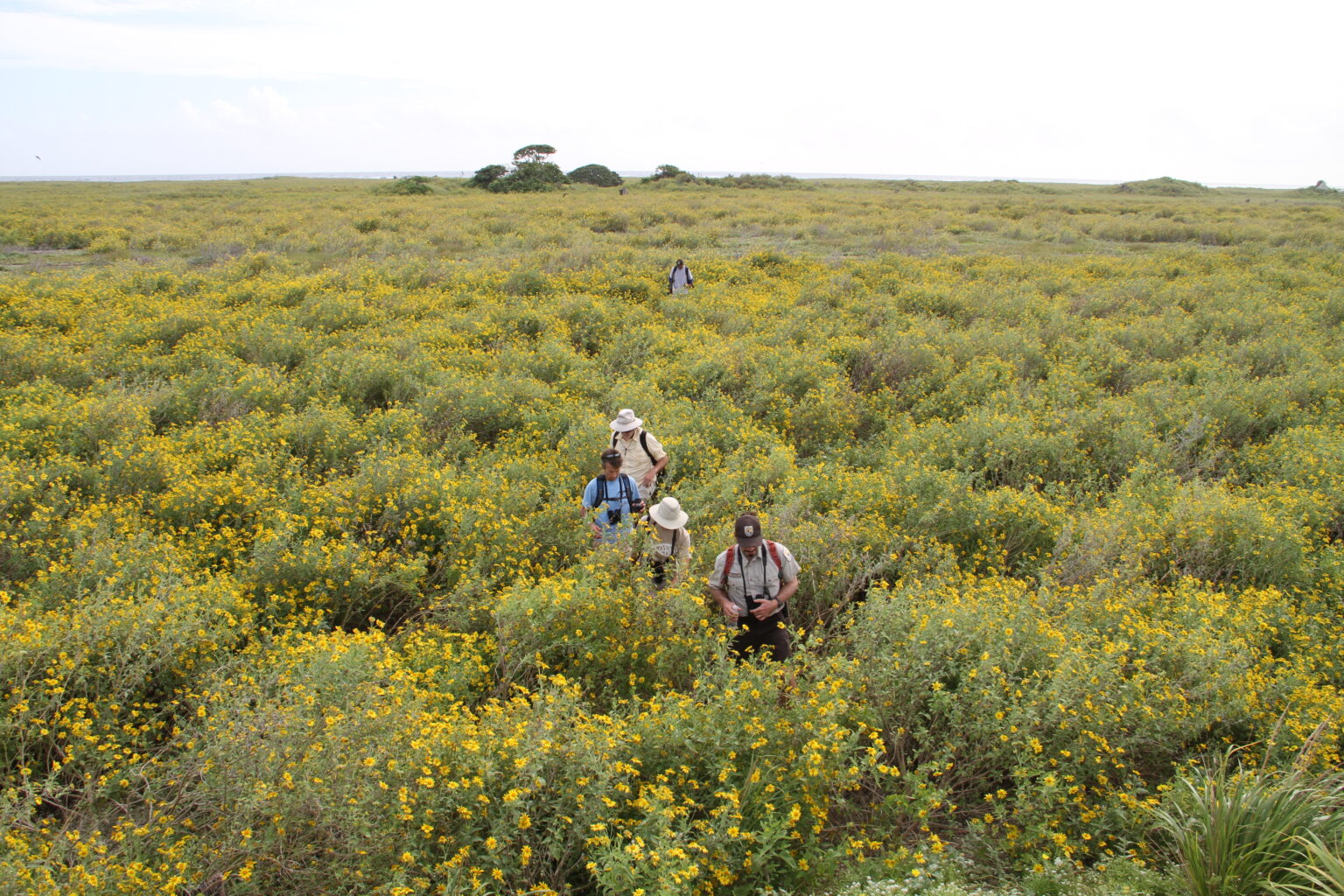 Dense stands of Verbesina stretch to the horizon on Midway’s Eastern Island in 2011, photograph by Pete Leary/USFWS
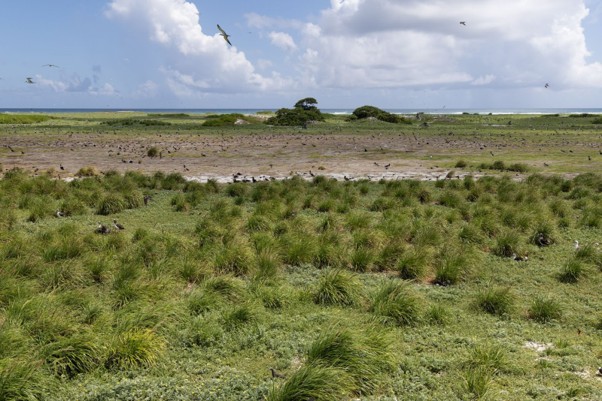
Photograph taken from the same spot with no Verbesina in sight in 2023, by Jon Brack
However, despite earlier claims of eradication being imminent, the abiding seedbank on both Midway islands has required the ongoing removal of emerging seedlings and hidden plants, as reported last September by the Friends of Midway Atoll National Wildlife Reserve (FOMA).
“For over 20 years, with several million dollars invested by the U.S. Fish and Wildlife Service (USFWS) and the National Fish and Wildlife Foundation (NFWF), with FOMA's additional support, the effort to eradicate invasive Verbesina encelioides and other incipient weeds from Midway Atoll has steadily advanced—and today, we’re closer than ever. This highly invasive, non-native plant once threatened vital seabird nesting habitat. But thanks to dedicated staff and volunteers, the number of plants found each year continues to decline. A key breakthrough? Targeting the persistent seedbank hidden in Midway’s sandy soils—an approach that’s proving eradication is possible.”
Watch a short video of FOMA volunteers pulling out small Verbesina plants among Laysan Albatrosses on Midway’s Sand Island, and another video hunting for and removing seedlings from among natural vegetation.
Eradicating alien plants on islands that support breeding populations of ACAP-listed albatrosses and petrels fits well within this year’s theme of “Habitat Restoration” for World Albatross Day on 19 June. ACAP Latest News will be pleased to hear of other attempts to eradicate invasive plants at localities where ACAP-listed albatrosses and petrels breed.
John Cooper, Emeritus Information Officer, Agreement on the Conservation of Albatrosses and Petrels, 11 June 2026