
 English
  Français
  Español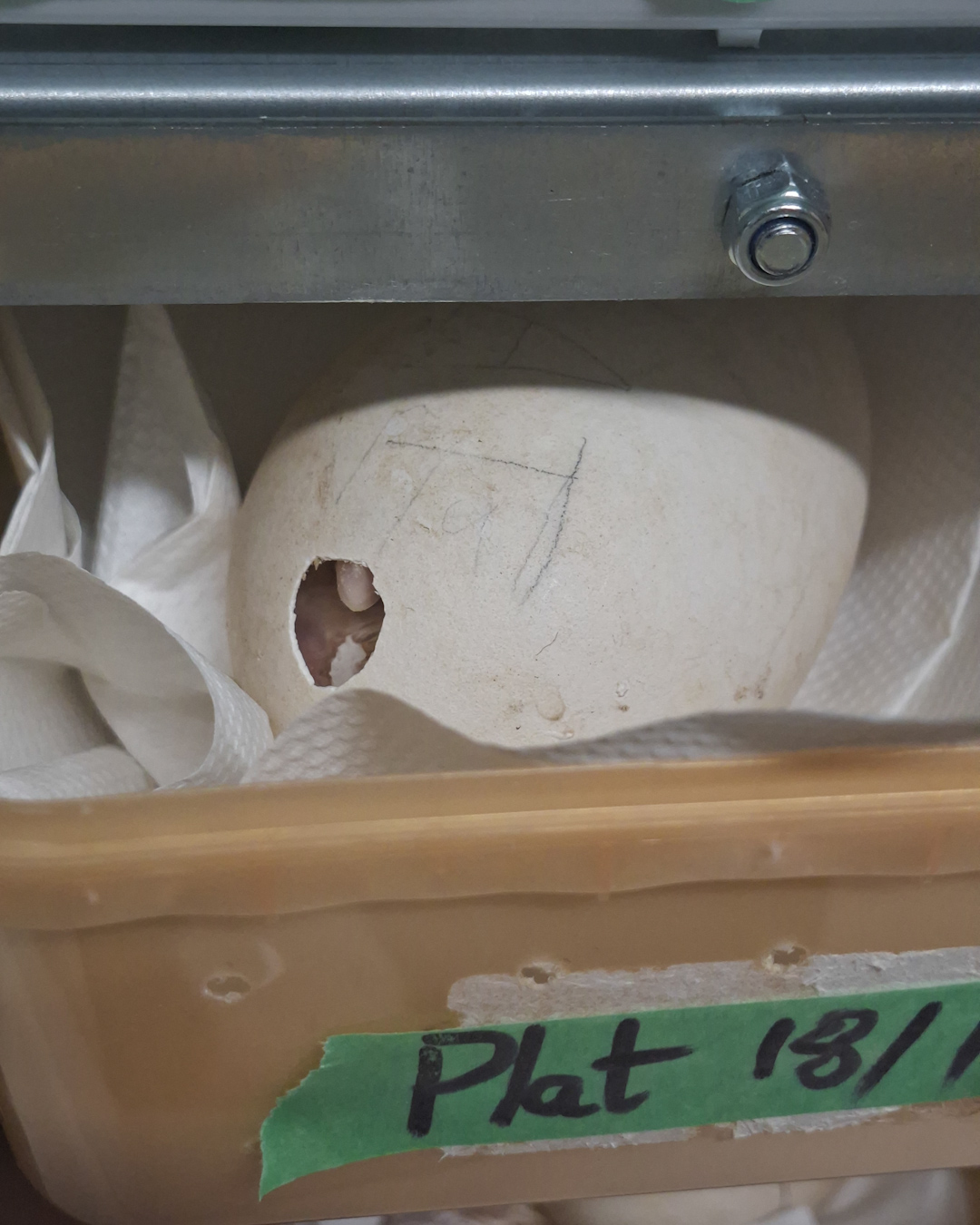
A pipping Northern Royal Albatross egg in an artificial incubator (watch video)
The small Northern Royal Albatross Diomedea sanfordi colony on New Zealand’s mainland in the Pukekura/Taiaroa Head Nature Reserve must be one of the most intensively managed seabird colonies anywhere in the world – at least outside attempts to establish new colonies by introductions. New Zealanders are good at hands-on management, just read up on their successful (and ongoing) efforts to save the Vulnerable Black Robin Petroica traversi, the Critically Endangered Kakapo Strigops habroptilus and the Endangered South Island Takahe Porphyrio hochstetteri from looming extinctions. Three examples, to which we can add the globally Endangered Northern Royal Albatross.
The Department of Conservation rangers at Pukekura/Taiaroa Head utilize a plethora of interventions to maximise breeding success. Their hands-on approach with the birds extends throughout the whole breeding season. These activities fit well with this year’s celebration of World Albatross Day (WAD2026) on 19 June and its theme of “Habitat Restoration”. It is therefore intended to feature them in ACAP Latest News during the course of the 2025/26 breeding season.
To start off, the process followed with hatching eggs and hatchlings in their first week out of the shell is described here by way of captioned pictures. This must be the most intensive time during the breeding cycle for the rangers and therefore seems a good place to start.
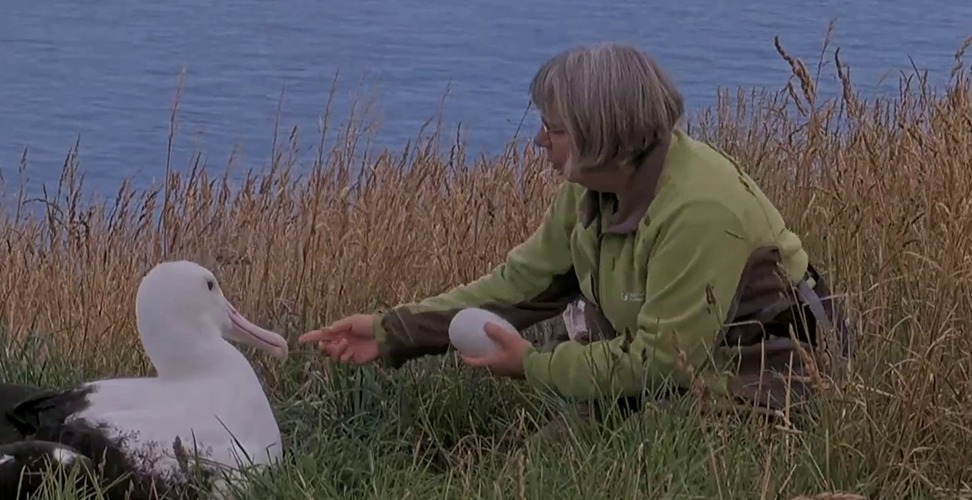 To avoid fly strike harming chicks during hatching, which can take four to five days, pipping eggs are collected and placed in artificial incubators, while the apparently unconcerned bird receives a dummy egg. Phlegmatism comes to mind!
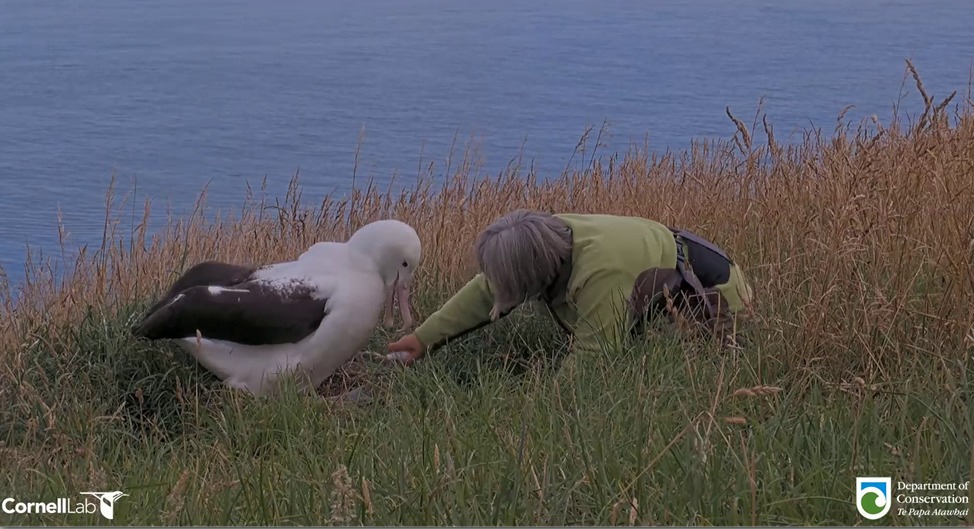
At the same time the nest and surrounds are sprayed with a bird-safe insect repellent
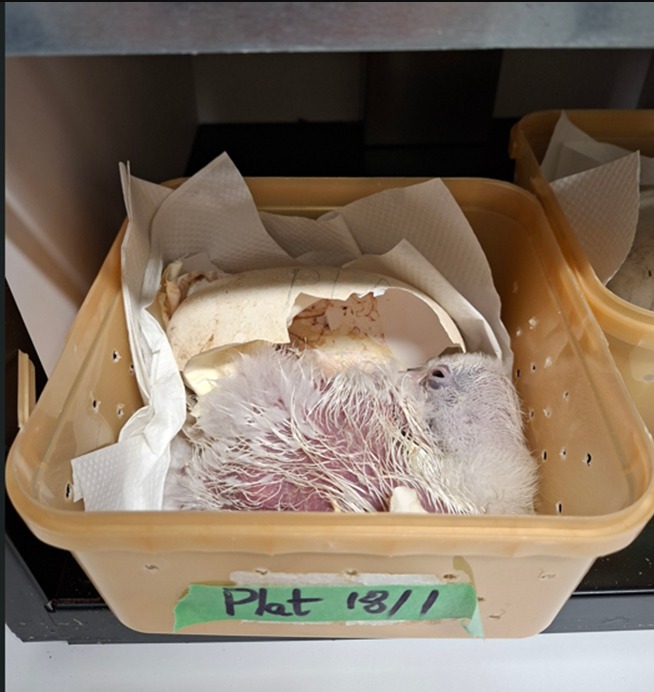 Successfully out of its shell after three days in the incubator
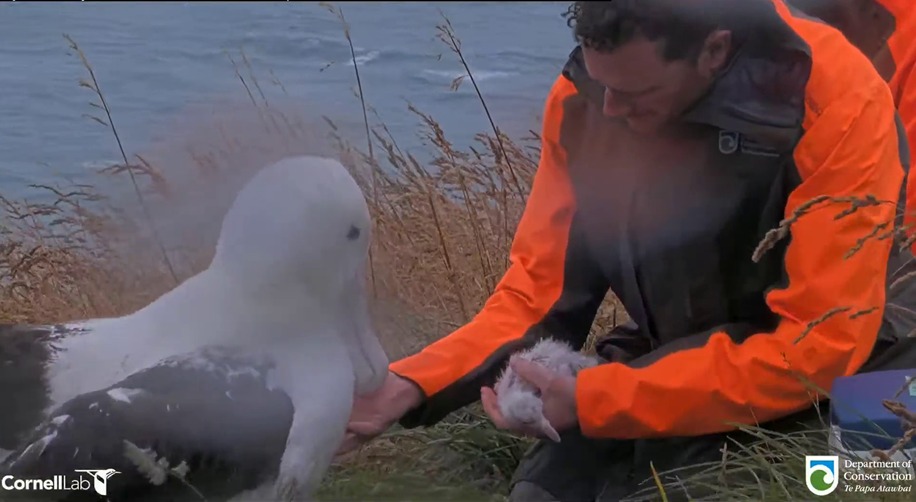 Calm acceptance. Once hatched, the chick is returned to the nest and the dummy egg is removed (watch video)
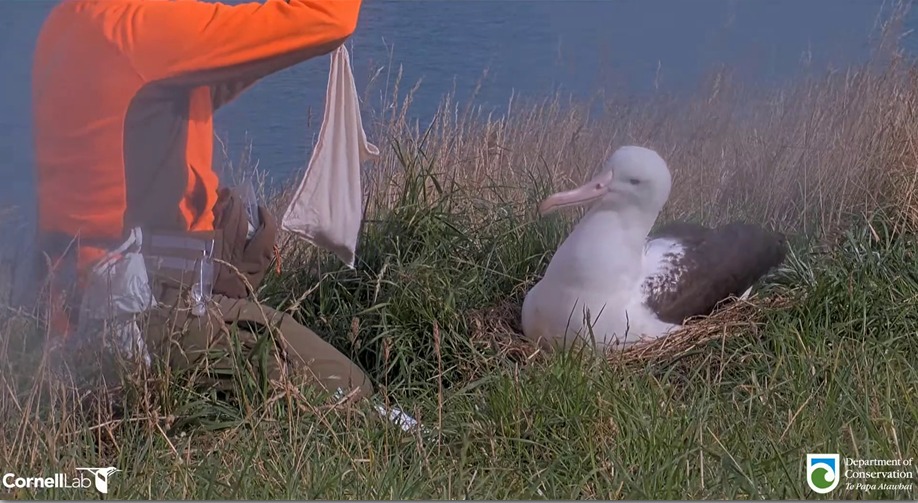 Department of Conservation rangers then conduct twice-daily health checks and weigh-ins for the first five days after hatching (watch video), followed by daily checks for the next five days, and then weekly weighing after that. These measurements help confirm that the chick is growing as expected
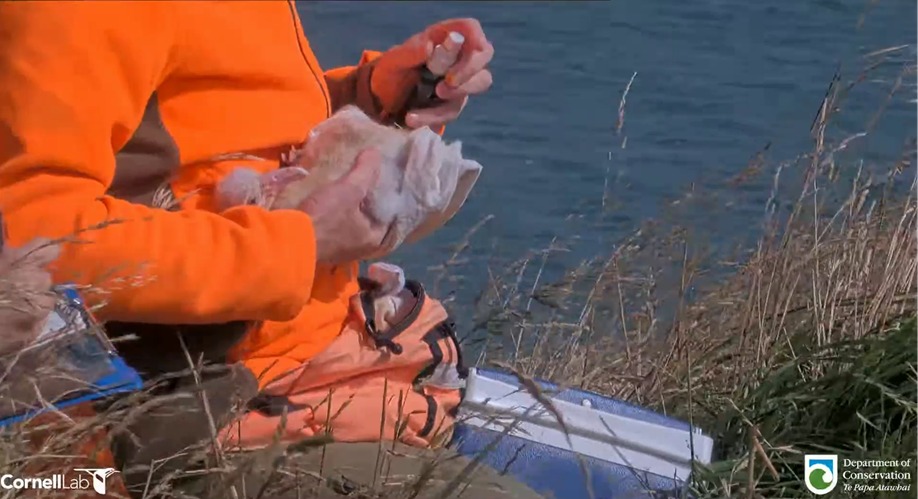 Upside down! During weighing the chick can get a squirt of insect repellant. Paper towels might be placed under the chicks to absorb moisture from rain
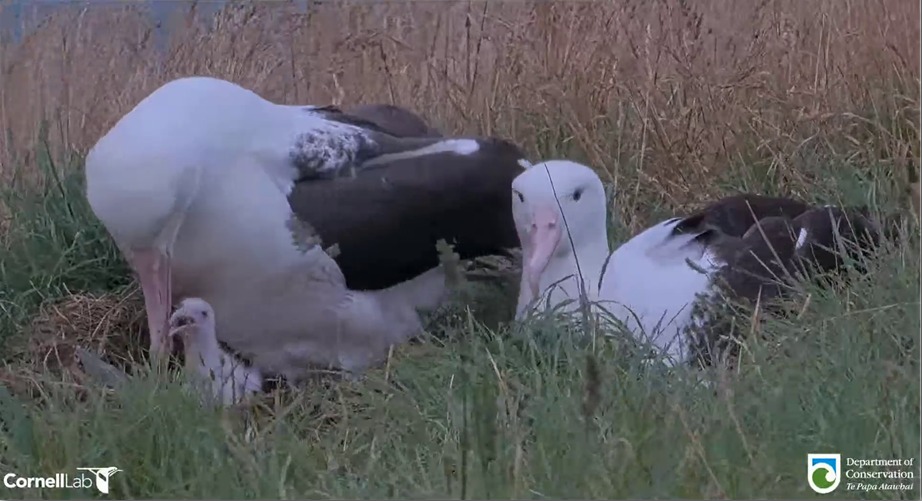 Happy family. The mate returns from sea to feed its chick (watch video)
Watch one pair throughout the breeding season via the 24-hour Royal Cam.
Information and photographs by Sharyn Broni and the Department of Conservation from the Bird Cams and Royal Cam Albatross Group New Zealand Facebook pages.
John Cooper, Emeritus Information Officer, Agreement on the Conservation of Albatrosses and Petrels, 30 January 2026