
 English
  Français
  Español
 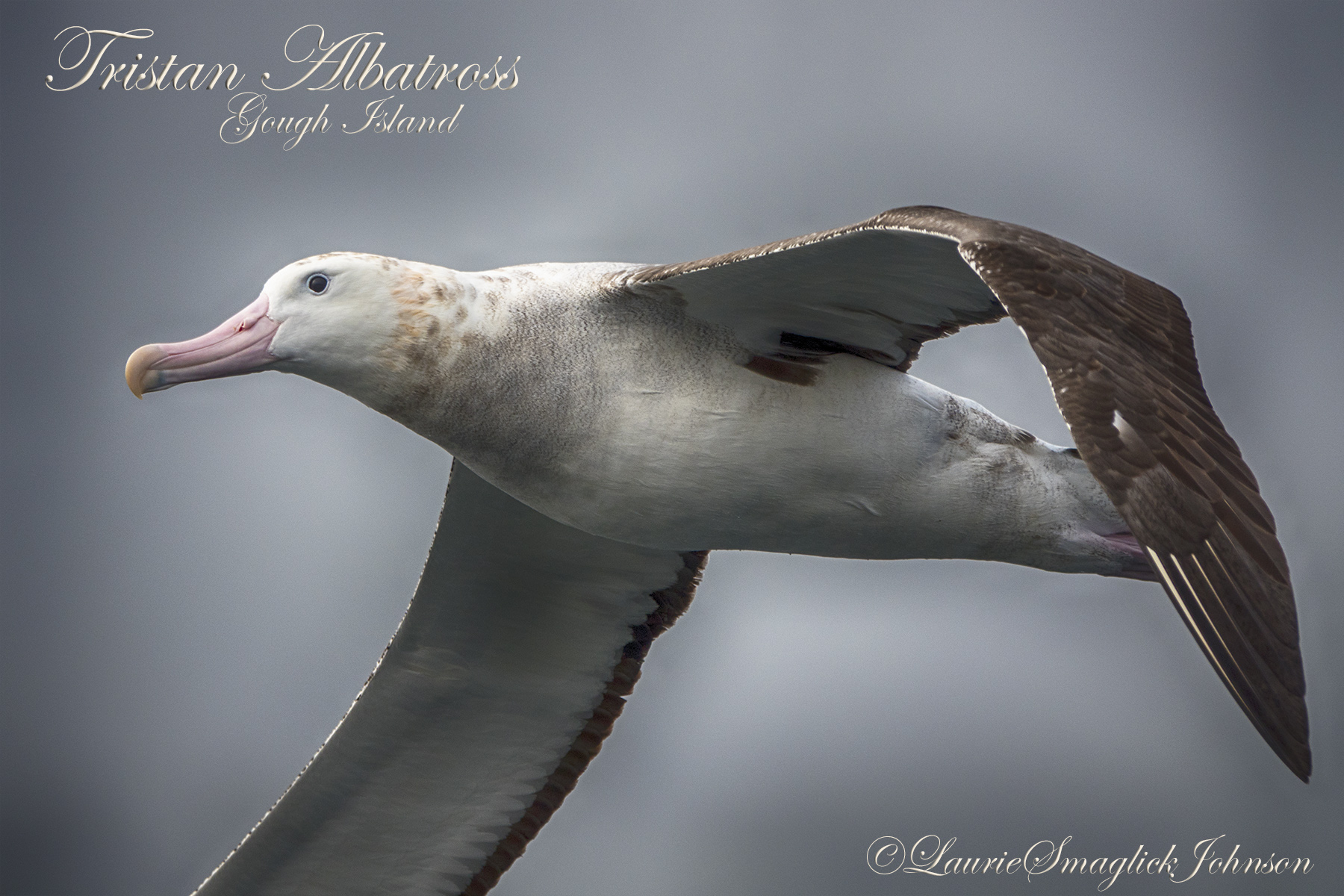 A Critically Endangered Tristan Albatross near Gough Island in the South Atlantic – one of the species included in the publication, photograph by Laurie Smaglick Johnson
Marie-Morgane Rouyer (CEFE, University of Montpellier, France) and many authors have published open access in the journal Conservation Letters on using seabirds tracked at sea in the Atlantic Ocean to advise on expansion of marine protected area coverage. The data set includes tracking information from 12 ACAP-listed albatrosses, petrels and a shearwater that occur in the Atlantic.
The paper’s abstract follows:
“Countries have committed to expanding the marine protected area (MPA) network to 30% of the world’s ocean by 2030, more than tripling current coverage, and focusing on areas important for biodiversity. For such expansion to translate into effective conservation of marine biodiversity, it must rely on the best available knowledge. Here, we analyze tracking data on > 13,000 individuals (44 species, eight families) to map the distribution of highly mobile seabirds in the Atlantic Ocean and adjacent seas throughout the year. We identify regions important year-round or seasonally. The High Seas are as important as national waters for highly mobile seabirds but are even less protected. Current Atlantic MPAs hold < 14% of tracked species density, but their expansion to 30% of the ocean could protect up to two thirds. We share this new knowledge layer to support national and international efforts and policies to strategically expand the Atlantic MPA network.”
With thanks to Sue Tonin.
Reference:
Rouyer, M.-M., et al. 2026. Highly Mobile Seabirds Reveal Areas of Conservation Importance Across the Atlantic Ocean. Conservation Letters 19(5). 5: e70075.
John Cooper, Emeritus Information Officer, Agreement on the Conservation of Albatrosses and Petrels, 06 October 2026