
 English
  Français
  Español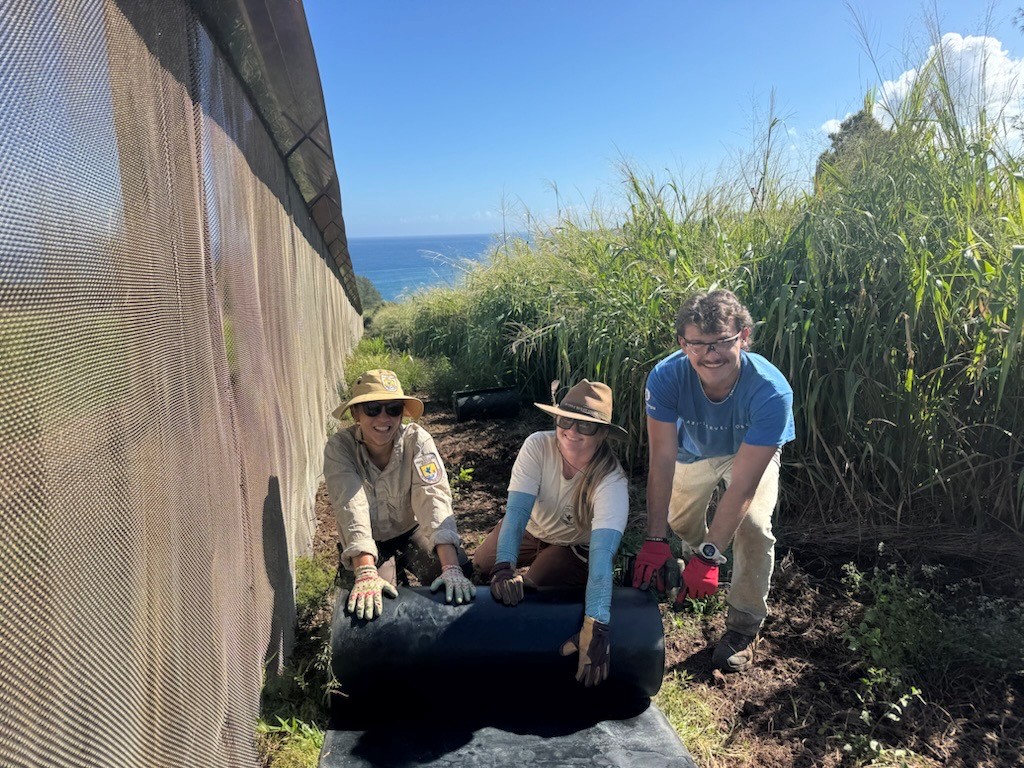
Refuge Complex team members lay the first stretch of matting along the exterior perimeter of the predator-proof fence in the Kīlauea Point NWR, photograph from the US Fish & Wildlife Service
Biology and habitat maintenance teams have initiated an Invasive Weed Control Program in the Kīlauea Point National Wildlife Refuge on the Hawaiian island of Kauai to help manage invasive plants along the perimeter of the predator-proof fence that protects Laysan Albatrosses Phoebastria immutabilis and other breeding seabirds from feral cats and pigs, rodents and stray dogs. The fence runs along 2.1 miles (3.4 km) of challenging terrain, making management efforts very difficult in a year-long growing climate.
“This year, teams are beginning to install matting derived from used industrial conveyor belts to help manage weed growth. Much more durable than traditional weed matting, this recycled material will resist our harsh climate for many years, helping to keep the predator resistant fence free from vines, grass, trees and other encroachments that can reduce the efficacy of the fence – directly helping to keep our seabird populations safe from introduced mammalian predators including rats, cats, dogs and pigs”.
The work reported here fits well with this year’s theme for World Albatross Day on 19 June of “Habitat Restoration”.
Information from Wild Times, the January 2026 online newsletter of the Friends of Kauaʻi Wildlife Refuges.
John Cooper, Emeritus Information Officer, Agreement on the Conservation of Albatrosses and Petrels, 11 February 2026