
 English
  Français
  Español
 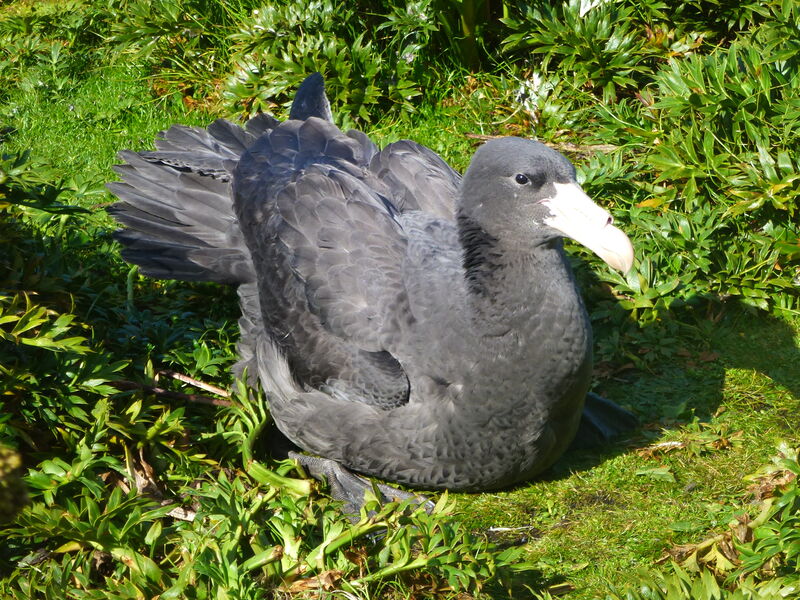 A Northern Giant Petrel chick close to fledging on New Zealand’s Auckland Island, photograph by Colin O'Donnell
Highly Pathogenetic Avia Influenza (HPAI) has been confirmed in a Northern Giant Petrel Macronectes halli from the southeastern corner of New Zealand's North Island.
“A third case of H5 bird flu has been detected in a northern giant petrel, in the Wairarapa. Ministry for Primary Industries says it was found dead on a remote Cape Palliser beach. It follows cases found in a kāhu, or swamp harrier, and a brown skua. It was found by a Department of Conservation (DOC) ranger, who notified the MPI hotline. Samples received by the MPI Animal Health Laboratory on 14 August were tested and initially found low levels of influenza virus in the bird. It took several rounds of testing to confirm bird flu.”
The New Zealand record is the first for an ACAP-listed seabird. In Australia at least 17 giant petrels have been found to be infected with HPAI.
John Cooper, Emeritus Information Officer, Agreement on the Conservation of Albatrosses and Petrels, 24 August 2026