 English
  Français
  Español
 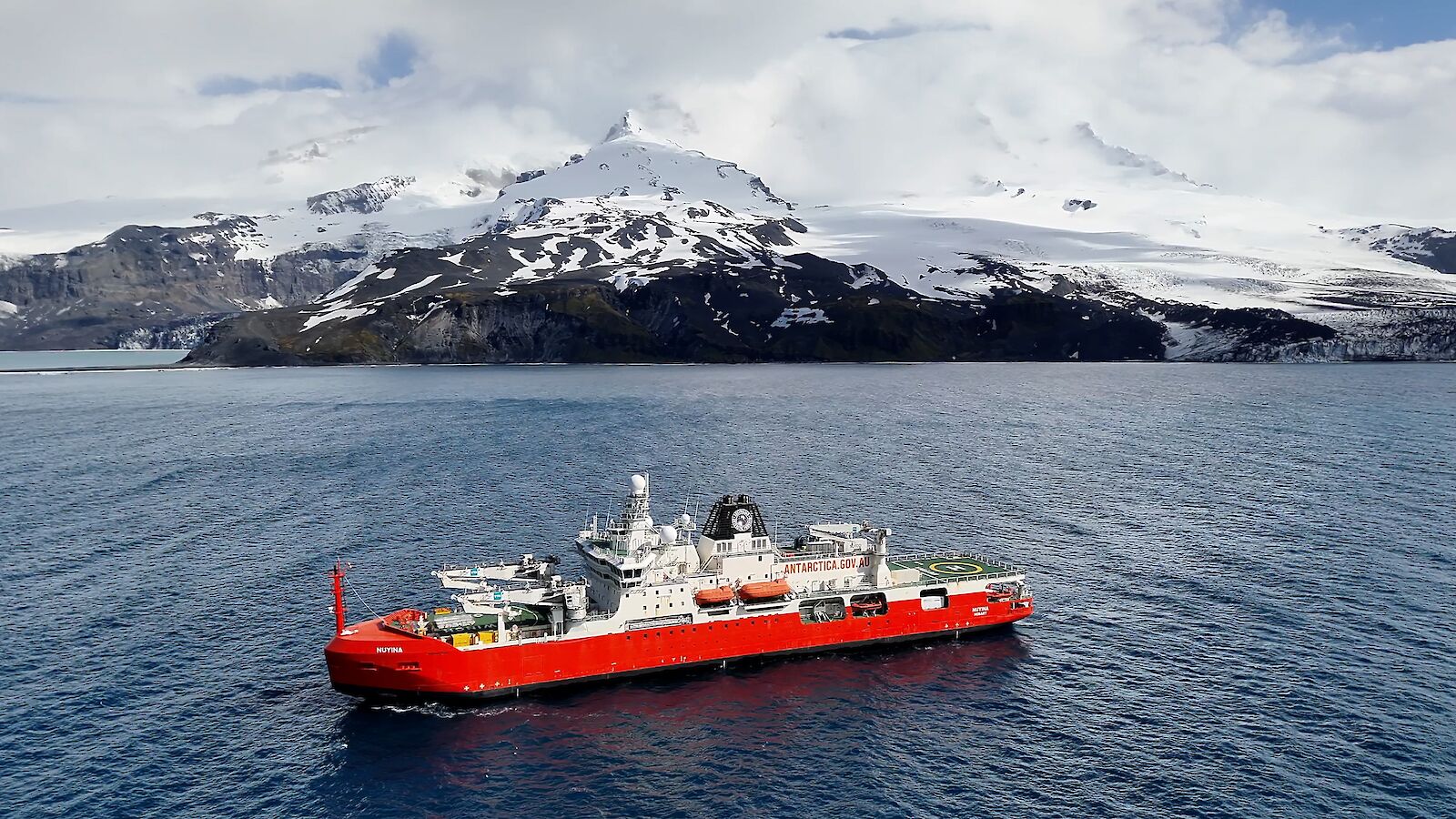 RSV Nuyina at Heard Island in October 2025, photograph by Simon Payne
Australia’s icebreaker, RSV Nuyina, has visited Heard Island for the second time this year, this time for a 25-day science and environmental management visit. The ship spent 10 days at the World Heritage-listed Heard Island in October. “V1 was a quick visit to lay the foundations for V2 and capture some key data points early in the wildlife season”. V2 is a 25-day programme, giving more time to collect samples and data.
On V1, samples were taken from Southern Elephant Seals Mirounga leonina after a large number of dead pups was found on Heard Island’s south coast. These samples tested positive for the highly contagious H5 bird flu (Highly Pathogenic Avian Influenza, click here). By the time V2 reached the island, the elephant seals would have finished breeding, but fur seals and seabirds would have started. A key focus for wildlife biologists will be looking at whether H5 bird flu is now impacting other species and assessing the spread of the virus on the island.
“During V2 we will assess for any signs and symptoms of H5 bird flu in other species, collect further samples for virus confirmation and assess the population sizes of priority species so the short-term and long-term impacts of the virus can be assessed,” wildlife biologist Dr Julie McInnes said.
 A Black-browed Albatross feeds its chick on Heard Island, photograph by Roger Kirkwood
Heard Island supports breeding populations of ACAP-listed Black-browed Albatrosses Thalassarche melanophris, Light-mantled Sooty Albatrosses Phoebetria palpebrata and Southern Giant Petrels Macronectes giganteus. (click here).
Read more on V2 here.
John Cooper, Emeritus Information Officer, Agreement on the Conservation of Albatrosses and Petrels, 23 December 2025