 English
  Français
  Español
 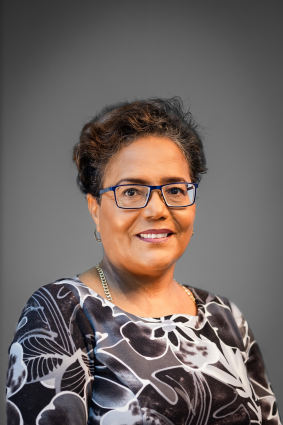 Ms Graça Bauleth D’Almeida
The Fifteenth Meeting of ACAP’s Advisory Committee (AC15) is being held over five days in the Swakopmund Plaza Hotel, Swakopmund, Namibia. This is the first time ACAP has met in the country. Although Namibia is not a Party to the Agreement, it has sent observers to many of its meetings over the years. AC15 follows on from the previous week’s meetings of its Population and Conservation Status Working Group (PaCSWG9), the Seabird Bycatch Working Group (SBWG13) and a joint SBWG13/PaCSWG9 meeting. Reports of these three meetings will be considered by AC15.
Day One of AC15 was opened with an address from Ms Graça Bauleth D’Almeida, Director: Resources Management, Directorate: Marine Ecosystem and Fisheries Research, Namibia Ministry of Agriculture, Fisheries, Water and Land Reform, who also is attending the Advisory Committee meeting as Head of Delegation for Namibia as an observing Range State. The Directorate is mandated to conduct research to determine the status of the stocks and providing scientific advice on the sustainable management of Namibia's marine ecosystem and promoting public awareness. In her address she welcomed delegates and observers to the meeting saying “I wish you all a pleasant stay in Swakopmund and hope that you have time to explore the beautiful Namibian scenery and experience the wonderful hospital by the Namibian people. It is indeed a great honour for Namibia to host the 15th Advisory Committee and Subsidiary body meetings of the Agreement on the Conservation of Albatrosses and Petrels (ACAP) and we look forward to participating in Observer capacity and contribute to the deliberations of the meeting.”
She continued “Namibia continues to translate international commitments into practical conservation actions. Such examples include the introduction of seabird bycatch mitigation measures into our hake fisheries regulations, which saw a 98% reduction in seabird bycatch in the longline and 95% reduction in the trawl fisheries. The Namibian hake fishery is one of only two fisheries in Africa certified as sustainable by the Marine Stewardship Council (MSC). During its first five-year certification period, significant efforts were made to reduce the fisheries’ impact on seabirds.”
Ms D’Almeida closed her remarks by saying that Namibia understands the importance of becoming a Party to Agreement, saying we have made progress towards accession and expect the instrument of depository to be made by the end of this year, if not before the next ACAP annual meeting.”
In reply, Dr Michael Double, as Chair of the ACAP Advisory Committee thanked Ms D’Almeida for her welcoming remarks and on behalf of the delegates and observers expressed pleasure that Namibia would become a Party to the Agreement in not too long a time.
During the day the meeting considered the report of the Taxonomy Working Group that conducts its business by correspondence. The working group’s report was presented by its Convenor, Mark Tasker, who is also attending AC15 as the UK’s Member of the Advisory Committee. Tomorrow the meeting will consider reports on the Population and Conservation Status and Seabird Bycatch Working Groups. On Wednesday 3 June the meeting, among other matters, will consider the venue and timing for AC16, due to be held in 2027. On Thursday 4 June the attendees will be taken on an excursion to the nearby fishing town of Walvis Bay. The meeting will close on Friday 5 June, which will be devoted to adopting the Advisory Committee’s report. More details of daily discussions are given in the meeting schedule.
AC15 is being attended by 11 of the 13 Parties to the Agreement: Argentina, Australia, Brazil, Chile, Ecuador, New Zealand, Peru, South Africa, Spain, United Kingdom and Uruguay. In addition, observers are present from Namibia, Chinese Taipei, BirdLife International and the Namibian Nature Foundation.
The first day of AC15 ended with an evening function hosted by Namibia that was enjoyed by all the meeting attendees.
John Cooper